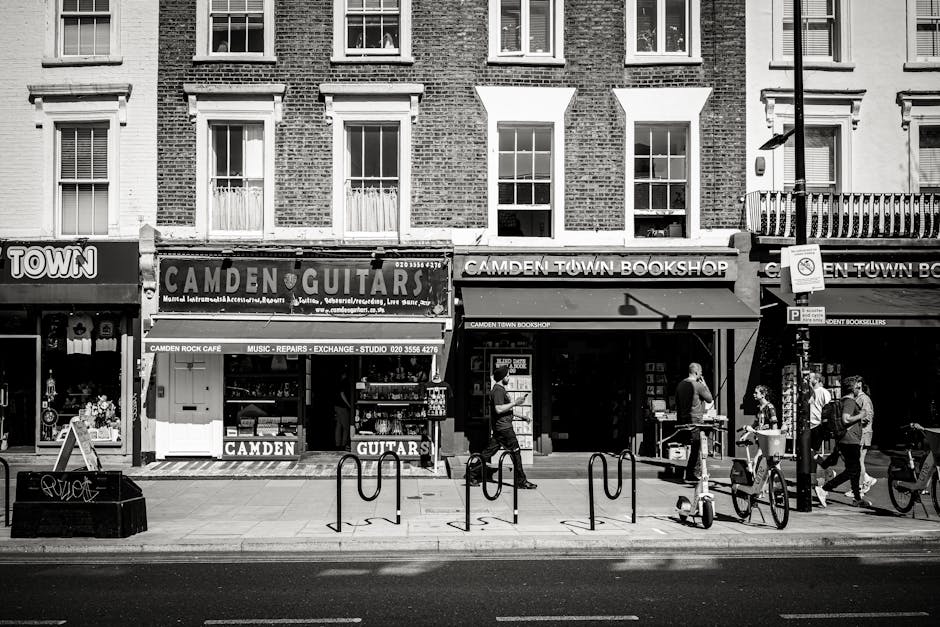
Camden High Street Movers Guide for Flats Above Shops
Moving into or out of a flat above a shop on Camden High Street can feel straightforward on paper and slightly chaotic in real life. Narrow stairwells, busy pavements, delivery bays, awkward entrances, and the simple fact that people are trying to run businesses below you all change the moving day rhythm. This Camden High Street movers guide for flats above shops is built to help you plan the move properly, avoid the classic headaches, and understand what really matters before anyone lifts a sofa. Truth be told, it is often the small details that decide whether the day feels calm or a bit of a scramble.
Whether you are moving a studio above a cafe, a one-bedroom over a retail unit, or a larger flat accessed by a shared stairwell, the basics stay the same: plan access, protect the building, reduce lifting where you can, and choose the right moving method for the space. If you want a broader overview of domestic moving help, you may also find home moves useful, especially when your move is part of a full household relocation rather than a small clearance.
Below, you will find a practical, local-first breakdown of how these moves work, what to expect, where costs and delays usually creep in, and how to keep the day moving without upsetting neighbours, shop staff, or your own back.
Table of Contents
- Why flats above shops need a different moving approach
- How the moving process works on Camden High Street
- Key benefits and practical advantages
- Who this guide is for and when it makes sense
- Step-by-step guidance for a smoother move
- Expert tips for better results
- Common mistakes to avoid
- Tools, resources and recommendations
- Law, compliance, standards and best practice
- Options, methods and comparison table
- Case study or real-world example
- Practical checklist
- Conclusion
- Frequently asked questions
Why Camden High Street Movers Guide for Flats Above Shops Matters
Flats above shops are not the same as standard residential moves. That sounds obvious, but it is easy to underestimate how much the location changes the job. On a street like Camden High Street, you are dealing with a busy mix of pedestrians, traffic, deliveries, retail opening hours, and shared entrances that may not have been designed for heavy furniture in the first place.
The big issue is access. A removal team may have to work through a narrow stairwell, a side passage, or a single front doorway that also serves the shop below. There may be no lift. There may be a tight bend halfway up the stairs. And if the building is old, the banister may not be the sort of thing you want a wardrobe brushing against. Moving a property like this well means thinking like a planner, not just a lifter.
It also matters because the shop below has to keep operating. A late delivery of stock, a queue of customers, or a blocked pavement can quickly turn a normal move into a neighbour complaint. Let's face it, nobody wants to be the person whose sofa sits in the doorway while a florist, barber, or takeaway tries to get on with the day.
In practice, a good moving plan protects:
- the flat and its shared areas
- the business below
- your furniture and boxes
- the moving crew's safety
- your schedule, which is usually the first thing to go sideways
If you are comparing different levels of help, it can also be worth looking at removal services and man and van options, because flats above shops often benefit from a more flexible setup than a large, one-size-fits-all truck booking.
How Camden High Street Movers Guide for Flats Above Shops Works
In a flat above shops move, the process usually starts before the van arrives. That is the bit many people miss. The team needs to know where to park, whether there is rear access, how many flights of stairs are involved, whether any furniture must be dismantled, and if there are time windows when the street is less congested.
On the day, movers will generally try to create a clear route from the flat to the vehicle. If the route is tight, they may use smaller loads, protective blankets, strap systems, dollies, or a more careful two-person carry. Sometimes a smaller vehicle is actually better than a bigger one. A huge truck may sound efficient, but if it cannot stop close enough to the entrance, it can slow everything down. Annoying, but true.
For many Camden properties, the best approach is a short-load strategy: park sensibly, move items in stages, and keep the hallway clear so the move does not jam up the building. If the property includes bulky furniture or a tricky staircase, the team may recommend disassembly before lifting begins. That is not overkill; it is usually the difference between a clean move and a scratched wall.
You may also need to think about:
- access codes or keys for shared doors
- lift bookings, if there is a lift at all
- protection for floors, bannisters, and corners
- timing around shop opening hours
- where boxes can be staged without blocking customers or neighbours
Some moves are simple enough for a light, same-day job. Others need more structured support, especially if the flat is fully furnished or the staircase is unforgiving. If packing is part of the problem too, packing and unpacking services can take a lot of pressure off the day.
Key Benefits and Practical Advantages
When a move above shops is planned properly, the benefits are easy to feel. Everything tends to run faster, the property is better protected, and everyone involved is less frazzled. That last one matters more than people admit.
Here are the main advantages of using a move plan tailored to this type of building:
- Less risk of damage: protection for walls, doors, stairs, and furniture is easier to manage when the route is mapped out in advance.
- Better street coordination: Camden High Street can be busy, so timing and vehicle placement matter a lot.
- Faster loading and unloading: you avoid unnecessary back-and-forth because everyone knows the route.
- Lower stress for neighbours and businesses: fewer blocked entrances and fewer awkward apologies.
- Smarter vehicle choice: a moving van or smaller setup may suit the space better than a larger truck.
There is also a financial upside, even if it is not always obvious at first. A carefully planned move can reduce wasted labour time, which is often where unexpected costs creep in. When movers are not waiting for parking, detouring around access problems, or undoing avoidable mistakes, the day is simply more efficient.
Expert summary: flats above shops reward preparation more than brute force. If the access is tight, the building is shared, or the street is busy, planning beats guesswork every time.
Who This Is For and When It Makes Sense
This guide is for anyone moving into, out of, or within a flat above a shop on or around Camden High Street. That includes renters, first-time buyers, long-term residents, landlords arranging a tenant changeover, and people who need to clear a property quickly without causing trouble downstairs.
It makes sense especially when one or more of these apply:
- your stairwell is narrow or steep
- the only access is through a shared entrance
- parking is limited or sensitive
- you have bulky furniture, instruments, bikes, or fragile items
- the shop below opens early or closes late
- you need the move done in one controlled window
It is also relevant if you are moving a small household and want a more agile solution. In that case, a service such as man with van may be a better fit than a full-scale move, especially if your belongings are compact and access is the main issue rather than volume. If the situation is more substantial, house movers can be a better match.
Sometimes the real question is not "how much stuff do I have?" but "how annoying is the access?" That sounds blunt, I know, but it is often the deciding factor.
Step-by-Step Guidance
A good move above shops is usually won or lost in the preparation stage. Here is a sensible way to break it down.
1. Walk the route before moving day
Check the exact path from the flat to the vehicle. Count stairs. Look for bends. Notice if there is a tight doorway, a low ceiling, or a spot where a wardrobe will need to turn on its edge. A quick walk-through can save a lot of head-scratching later.
2. Measure the awkward items
Measure sofas, beds, wardrobes, mirrors, desks, and washing machines. Then compare those measurements with the stairwell, door frames, and landing space. If something is obviously too awkward, dismantle it before the move begins. Do not leave that conversation until the van is parked outside.
3. Decide on the vehicle and crew size
For some Camden High Street flats, a smaller vehicle with multiple trips is easier than one big vehicle that causes access trouble. For others, a larger van or truck makes sense if there is good loading space and the move volume is substantial. The right choice depends on the street, not just the number of boxes.
4. Protect the building first
Use floor runners, blankets, corner guards, and door protection where needed. Shared properties can pick up scuffs quickly, and shop owners below do not enjoy seeing their doorway blocked by scratches, dust, or packaging. Fair enough.
5. Pack by room and by priority
Pack essentials separately. Keep documents, chargers, medication, keys, and a kettle in a clearly marked bag. That small step can transform the first night in the new place from chaos into something almost normal.
6. Coordinate timing with the building
If the shop below has deliveries or peak customer times, avoid clashing where possible. A move at 8:00 a.m. can feel very different from one at midday. Even half an hour can matter on a street like this.
7. Final sweep and sign-off
Before leaving, check cupboards, loft spaces, window ledges, and shared areas. It is the sort of thing people forget when they are tired. Then inspect the route for damage and collect keys, codes, or any building items that need returning.
Expert Tips for Better Results
A few small habits make these moves much easier. Nothing flashy. Just practical, field-tested common sense.
- Use labels that mean something: "Kitchen - fragile - unpack first" is better than "misc". Nobody enjoys guessing games at the end of a long day.
- Keep hallways clear: a narrow stairwell fills up quickly with boxes, bubble wrap, and stray tools. Clear routes save time and reduce accidents.
- Disassemble early: flat-pack furniture, bed frames, shelving, and large tables often move better when broken down in advance.
- Have one person in charge of decisions: too many voices on a tight staircase can slow the whole job down.
- Plan for weather: Camden rain is not exactly a surprise, but wet pavements and soggy cardboard are still a nuisance.
- Prepare a small overnight kit: if the move drags on, you will be glad you did.
If you want a more flexible moving option for lighter loads or tricky access, man and van removals can suit smaller flats surprisingly well. And if you need a more rounded residential service, removals is the broader category to consider.
One more thing: keep tea, water, and patience available. It sounds trivial, but on a long stair job, people appreciate it. A lot.
Common Mistakes to Avoid
Most problems in shop-top flat moves are predictable. That is good news, because predictable problems are fixable.
- Ignoring the access route: if you do not measure the stairs and doors, you are guessing. Guessing is expensive.
- Booking the wrong vehicle size: too large and you may struggle to park; too small and you may need endless trips.
- Leaving packing until the last minute: rushed packing leads to damage, missing items, and a very long evening.
- Forgetting the business below: if the shop needs clear access, communicate early.
- Not protecting the common areas: shared stairs and landings are the places where small mistakes become complaints.
- Trying to move oversized furniture without dismantling: this is where walls, knuckles, and tempers take a hit.
Another common slip is assuming every flat above a shop has the same access. Camden buildings are wonderfully varied, which is part of the charm, but also part of the challenge. Two adjacent properties can have completely different stair layouts and loading realities.
So, ask questions early. Boring? Maybe. Effective? Absolutely.
Tools, Resources and Recommendations
You do not need a mountain of equipment for this kind of move, but the right basics make a huge difference.
| Tool or resource | Why it helps | Best use case |
|---|---|---|
| Measuring tape | Checks furniture against doors, stair turns, and landings | Before dismantling or booking transport |
| Furniture blankets and straps | Protects items and helps secure loads | For awkward or heavy furniture |
| Floor protection | Reduces scuffs in shared hallways and stairs | Any move with communal access |
| Clear labels and markers | Speeds up unloading and unpacking | When boxes are going into different rooms |
| Professional packing help | Takes pressure off fragile or time-sensitive moves | Busy households, tight deadlines, fragile items |
For a better sense of what a company offers beyond transport, it can help to look at removal company and removal companies pages, especially if you are comparing service depth, not just price. If you are moving something bulky but not a whole household, furniture pick up may also be relevant.
When you are weighing costs, pricing and quotes is the sensible place to start. And if payment security matters to you, as it should, the site's payment and security information is worth a look before booking.
Law, Compliance, Standards, or Best Practice
For most people, the moving day itself is not about legal complexity. Still, there are a few practical standards and duties that matter in the background.
First, movers should work in a way that prioritises safety. That means sensible manual handling, avoiding unnecessary strain, and using the right equipment for the job. In the UK, this is generally understood as part of normal workplace safety practice rather than something mysterious or optional. On a steep Camden stairwell, careful lifting is not a nice-to-have; it is the job.
Second, if the move involves shared buildings, it is good practice to respect access routes and communicate with neighbours or building managers. You do not need a lecture for that. It is simply how you keep things civil.
Third, insurance matters. If furniture or fixtures are damaged during a move, having the right insurance and safety measures in place gives everyone more confidence. You can review a provider's approach through its insurance and safety information and the health and safety policy if available.
Finally, if you are hiring help, check the terms and conditions carefully. Not in a paranoid way; just in a sensible, grown-up way. You want to know what is covered, what is not, and how the company handles changes on the day. The same goes for any terms and conditions that apply to your booking.
There is also a broader trust signal in how a business handles things like recycling, complaints, privacy, and accessibility. Those pages may not affect the lift of your sofa directly, but they do tell you a lot about how the company operates.
Options, Methods, or Comparison Table
Different moving setups suit different flats above shops. The right choice depends on access, volume, time pressure, and how much you want handled for you.
| Method | Best for | Strengths | Trade-offs |
|---|---|---|---|
| Man and van | Smaller flats, lighter loads, quick local moves | Flexible, usually easier for tight streets | Less suitable for very large moves |
| Full removals team | Furnished flats, larger households, fragile items | More support, better for stairs and awkward loads | Typically more coordination needed |
| Moving van only | Simple move with good organisation already in place | Cost-effective for controlled jobs | You may need to do more yourself |
| Hybrid service | Mixed-size moves with tricky access | Balances cost and support | Requires good planning and clear instructions |
In a Camden High Street setting, the winning method is often the one that handles access best rather than the one with the biggest vehicle. That sounds almost too simple, but it is often the truth.
Case Study or Real-World Example
Imagine a one-bedroom flat above a small independent shop near the high street. The tenant has a sofa, bed frame, desk, dining table, six boxes of books, and a washing machine. Nothing outrageous. But the stairwell is narrow, the landing has a sharp turn, and the shop downstairs opens early.
In a move like this, the smart approach would usually be:
- measure the sofa and bed frame in advance
- dismantle the bed before moving day
- protect the stairs and landing
- arrive early, before the street gets busy
- use a smaller vehicle positioned as close as practical
- move the washing machine separately with proper handling
The result is not glamorous, but it works. The move is completed without blocking customers, the flat is left intact, and the tenant is not still wrestling with a bed frame at 9:30 p.m. while eating a lukewarm sandwich on the floor. That little scene? Happens more often than people like to admit.
For a move like this, a service focused on man with van removal can be a sensible middle ground, especially if the load is moderate and access is the main challenge. If the job grows in complexity, a broader house removals solution may be the better route.
Practical Checklist
Use this before moving day. It is deliberately simple.
- Measure the largest furniture pieces.
- Check stair width, landings, and door frames.
- Confirm parking and loading access.
- Tell the shop below about the move if appropriate.
- Book the right size vehicle for the access, not just the volume.
- Protect floors, corners, and bannisters.
- Disassemble bulky furniture early.
- Pack one essentials bag for the first night.
- Label boxes clearly by room.
- Keep keys, codes, and contacts in one easy-to-reach place.
- Set aside a backup plan if parking or access changes on the day.
- Inspect the flat and shared areas before you leave.
If you are still comparing providers, it can be sensible to start with removals near me if you want a local fit, or movers if you need a broader service overview. For people who prefer a lighter-touch approach, man with a van remains a common choice.
Get a free quote today and see how much you can save.
Conclusion
Moving a flat above shops on Camden High Street is all about practical control. The access is often tighter, the street is busier, and the building has more people to consider than a standard residential block. But with good planning, the move can still be clean, calm, and surprisingly efficient.
Focus on measurements, timing, protection, and the right vehicle choice. Keep the route clear. Be realistic about the stairs. And if the job looks a bit fiddly, that does not mean it is a problem. It just means it needs the right kind of help.
The nicest moves are the ones where everything fits, everyone stays polite, and the only real sound is a stairboard creak and the low thump of a box landing in the right room. Not perfect, just well handled. That is the goal.
Frequently Asked Questions
What is different about moving a flat above a shop?
The main difference is access. You are often dealing with shared entrances, tighter stairwells, limited parking, and the need to avoid disrupting the business below. That changes both planning and vehicle choice.
Do I need a smaller van for a flat above shops?
Not always, but smaller vehicles can be easier on busy streets and in awkward access spots. The right option depends on how close the vehicle can park, how much furniture you have, and whether the staircase is manageable.
How do movers protect shared hallways and stairs?
They may use floor protection, blankets, corner guards, and careful carrying techniques. In shared buildings, protecting the route is just as important as protecting the furniture.
Should I tell the shop below that I am moving?
If the move may affect their entrance, delivery space, or trading hours, yes, it is sensible to let them know. A quick conversation can prevent an awkward morning.
Can large furniture be moved up or down narrow stairs?
Sometimes yes, sometimes no. It depends on the size of the item, the stair turns, and whether the furniture can be dismantled. A proper measurement check before moving day is the safest approach.
Is packing service worth it for this kind of move?
It can be, especially if you are short on time or have fragile items. Packing and unpacking support is often helpful when the access is tricky and the move needs to be smooth rather than rushed.
How far in advance should I book a mover for Camden High Street?
As early as you can, especially if you need a specific time slot or you are moving during a busy period. Local access constraints can make the right booking window disappear quickly.
What if parking is limited on the day?
That is one of the most common problems on streets like Camden High Street. A good plan usually includes backup parking ideas and a vehicle choice that still works if the ideal spot is taken.
Are man and van services good for flats above shops?
Yes, often they are. They can be a strong fit for smaller loads, tighter access, and local moves where flexibility matters more than a huge vehicle.
What should I ask a removal company before booking?
Ask about access experience, vehicle size, insurance, protective equipment, timing, and what is included in the quote. If you want more context about the company itself, their about us page can help, and their complaints procedure may also show how they handle issues if something does go wrong.
How do I avoid damage in a building with a narrow stairwell?
Measure first, dismantle bulky items, protect the route, and move deliberately. Slow is often faster in these buildings, because one bad scrape can cost far more time than a careful carry.
What is the best first step if I am planning this move now?
Walk the property and measure the tricky parts. Once you know the access reality, everything else becomes easier to plan, from packing to vehicle size to timing.
Where can I get more information before I book?
You can review the company's contact us page if you need to ask specific questions, and it is also worth checking their recycling and sustainability information if responsible disposal matters to you during the move.